Three places information can live
Personal records live where you control them—your box or your cooperative's care—shared only on your instruction.
A council, club or business keeps its own governed records, exchanging with yours under declared rules and signed receipts.
Some information belongs to no one: shared dictionaries, public registries, tamper-evident anchors. Stored in the protocol—like a public noticeboard whose rules no owner can bend.
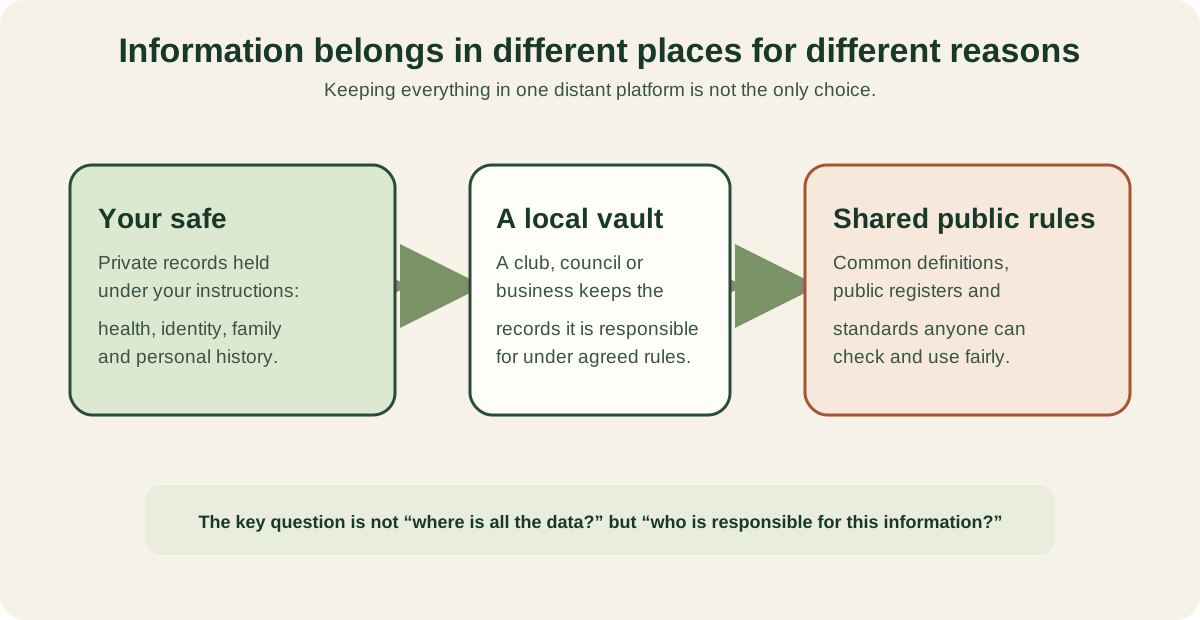
The ecosystem uses all three deliberately: private where it should be private, governed where it is shared, and protocol-resident where neutrality matters.
The real break: data separated from applications
Today, every application owns its silo—your messages live inside the app, and changing tools means abandoning your history. In this ecosystem the information lives in safes, vaults and protocols, and any permitted tool can work on it. Swap the tool, keep the data. That single inversion is what makes genuine digital transformation possible: communities choose software the way they choose contractors, without being locked in by where the records happen to sit.
Foundations for useful, safe AI
AI is only as trustworthy as what it can read. Today's models scrape the open web with no provenance and no permission; a reasoning engine on this stack reads verified, attributed, permissioned data—and can show its working. That is the difference between AI that extracts and AI that serves: the plumbing decides it. Local safes plus governed exchange plus a shared evidence layer are the foundations that make honest AI possible for a community, not just for whoever owns the biggest datacentre.
What it adds up to
A new information-management ecosystem: storage that answers to people rather than platforms, exchange that produces proof rather than disputes, and shared knowledge that ordinary tools can actually use. Built for digital transformation of community services, for supporting the people who support others, and for AI that works on evidence—all of it interoperable with the wider world, because the standards are open.