A bank for effort, not just money
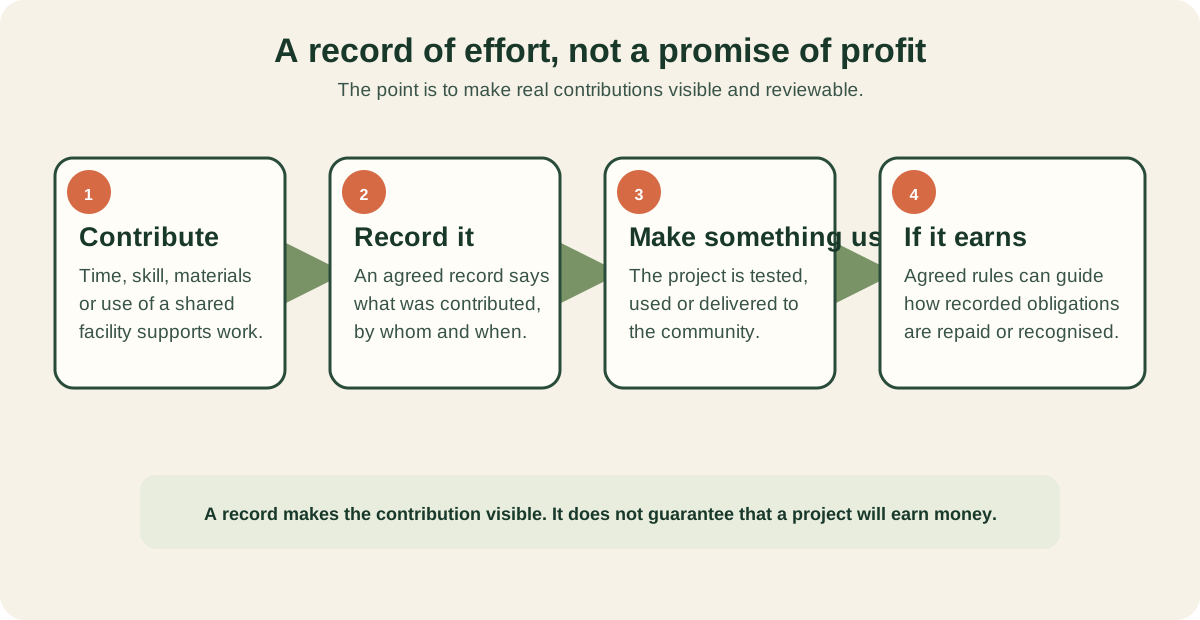
A bank does not actually store value—it stores information: a precise record of who deposited what. Organisations work the same way: every committee and company stands or falls on the quality of its records. The cooperative applies that same idea to human effort. Software teams already do this with tools like Git, which record every line of code—who wrote it, when, and what it improved. The community ledger does the same for real-world projects: who contributed which time, skill or materials, and what came of it.
Work is not only what pays
A clear line separates work from recreation and rest—and volunteering falls on the work side. An hour's value depends on the task, the person's skill and the usefulness of what it produced, not on whether an invoice exists. Keeping that record makes visible what the community has always known informally: who is reliable, who mentors, who shows up in a crisis. Character becomes something that can be demonstrated rather than merely asserted.
A community portfolio
Sport has always kept these books: a batting average or a tackle count says what a player contributed whether or not anyone was paying them. The equivalent for community life is a community portfolio—a collection of your own recognised contributions: disaster response, mentoring, maintenance, care. The difference from a "record" matters: a record is something an authority keeps about you; a portfolio is an asset you curate, held in your own data safe, under your own control. The recognitions inside it are sometimes called semantic currencies—not a new kind of money, but a formal recognition that not all value is money.
Shared only when you choose
A community portfolio is not a public scoreboard. Many people do good quietly and want no attention for it—their portfolio stays private in their own data safe. But the same person may one day need to show a doctor, an employer or a government officer who they are and what they have done—and then they can unlock exactly that, for exactly that party, and lock it again after. It works like a sealed letter of recommendation: you choose who reads it, and you keep the original.
A smartwatch shows why this matters. Its readings can genuinely help an older person stay independent—and genuinely help their doctor. Today the choice is usually all or nothing: hand everything to a distant company, or get no benefit at all. That is a false choice, and a harmful one. The safe rejects it: the information exists and stays under the person's control.
Why keeping the books protects people
Unrecorded goodwill is easy to strip: outsiders can profit from improvements volunteers built, precisely because nobody kept count. Logging effort creates a documented obligation cost—so when a project succeeds and earns, the people who did the work are repaid until their contribution is fairly met. Not royalties forever; fair compensation for real work. A community that keeps its books cannot be quietly mined.