The plain version
The aim is to make reliable food information easier to use in ordinary settings, while leaving health decisions with people and their clinicians.
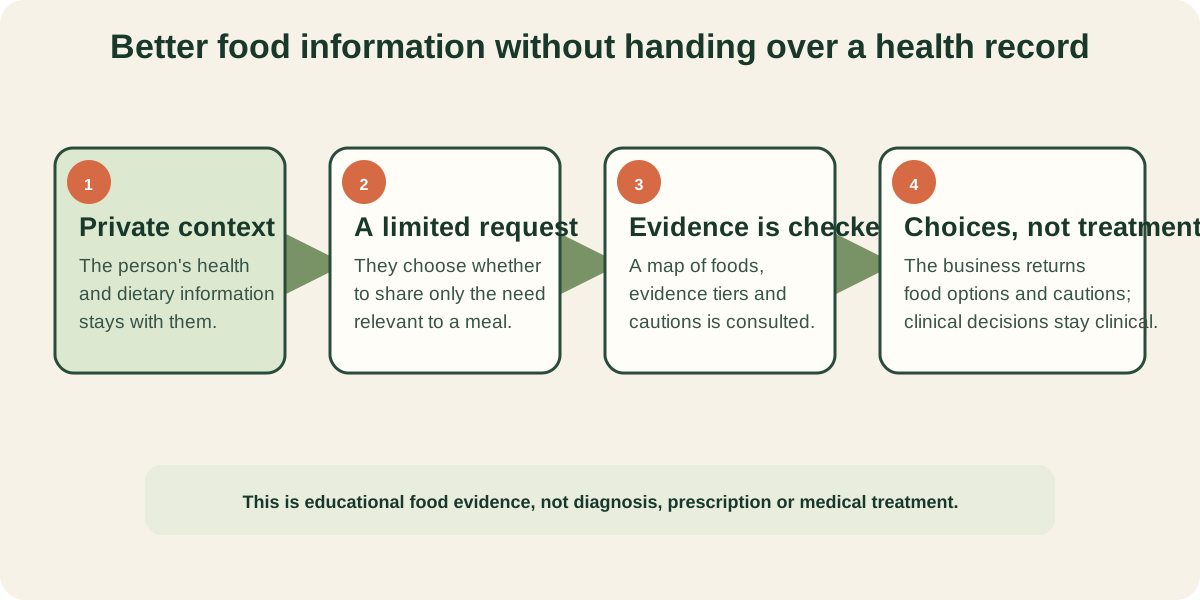
An evidence map between food and health
The foundation is a curated dataset: 297 normalised foods, fluids and ingredients, each linked to its botanical identity, key constituents and markers, the human organ systems it may support, and the health focus areas it relates to. Every claim carries an evidence tier (A–D), its provenance URLs, and a cautions column covering allergies, pregnancy, kidney disease and medicine interactions—because the same compound that helps one person harms another.
Structurally it is already a knowledge graph: a typed edge list (may_support, relates_to_focus, contains_or_marks) across nine organ systems, drawn from public evidence databases—FooDB, FoodAtlas, ChEBI, Phenol-Explorer, FOODBALL, the Comparative Toxicogenomics Database and ABCkb. As linked data it stores natively in a Solid pod, and any tool that reads RDF can reuse it.
From evidence to the plate
Evidence is only useful if it reaches a meal. The dataset's second half translates it: 200 practical meal options across 14 cuisine and context groups—restaurant, takeaway, grocery, café and home—each dish linked to its ingredient evidence IDs, with a "better order" column (light coconut milk, sauce on the side, extra vegetables) and the trade-offs and allergen checks that matter. So the question the graph answers is not "is this food good?" but "what on this menu fits this need?"
Private by architecture
The person’s health context—conditions, goals, dietary requirements—lives in their own pod. A databox-enabled restaurant, supermarket or takeaway receives only a scoped disclosure: the specific attributes needed for that purpose, granted for that exchange, then ended. The vendor's system matches the disclosure against the evidence graph and returns suitable choices. The health record never leaves home, and the business never holds a dossier it would have to protect.
This is the Solid databox pattern applied to food: governed exchange between two data spaces, each under its owner's control.
A commons, maintained cooperatively
The evidence map is itself a cooperative project: dietitians, growers, cooks and reviewers contribute entries and corrections, and every contribution is a logged resource commit with provenance—recognised work, not anonymous edits. Communities can extend it with local foods, native ingredients and regional cuisines, or fork it for their own context; because it is ordinary linked data, nothing about it is locked to one platform.
What it is not
An educational evidence map, not a treatment plan. It gives no doses and makes no claims to prevent or treat disease. Tier D entries are composition or traditional-use records only; normal food use and concentrated extracts are different exposures; and a linked beneficial constituent does not make a whole meal therapeutic. Matching real health contexts to real menus needs clinical governance and local partners first—the cautions column is load-bearing, not decoration.
Where it fits
The opportunity sits on top of the rest of the ecosystem: the databox supplies the governed exchange; concession credentials could subsidise qualifying choices at the point of sale through programmable grants; the digital economy edge stack hosts it locally; and cooperative projects provide the model for building and maintaining it. A town that runs this keeps a capability—knowing what its own food can do—that is normally owned by whoever collects the most data.