A small box in your home
The box itself is ordinary hardware—a Mac mini or a small-form-factor PC—running open software. What matters is not the box but where it sits and who it answers to: physically with you or your cooperative, and legally under your instructions. Nothing inside it is the company's to sell, because there is no company—only you, and the people you authorise.
Worth noting: not every record lives in someone's box at all. Some information—shared vocabularies, public registries, tamper-evident anchors—lives in the protocol itself: owned by no one, governed by rules rather than an owner. The new ecosystem page explains the three places information can live.
And if the box is lost, stolen, or becomes more than you can afford to run—the cooperative can hold an encrypted backup under your keys, and take standing instructions for what happens to it all when you die.
You are the boss
In law there is a simple relationship: a principal instructs, and an agent acts on their behalf. The chain of command here is strict, and the human always sits at the top:
Sole owner of your data and the only one who can authorise action.
Bound like a lawyer or doctor to serve only your interests; never permitted to sell or exploit what it holds for you.
A sub-agent: an obedient tool with no rights, motives or ownership of its own. It executes instructions; it never decides.
Outside the trusted circle. Nothing reaches them unless you instruct your agents to share it.
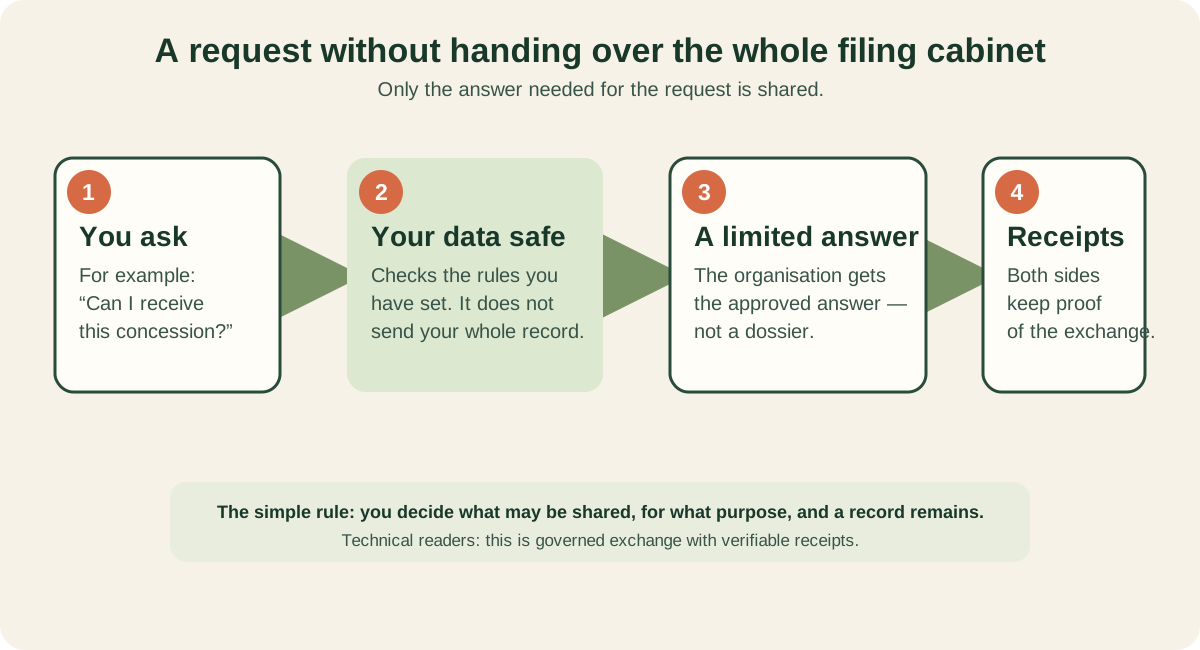
The journey of one request
What actually happens when you ask for something—say, proof that you are entitled to a concession? Follow one request through the system: